The Skillingsbolle, Bergen’s Bun
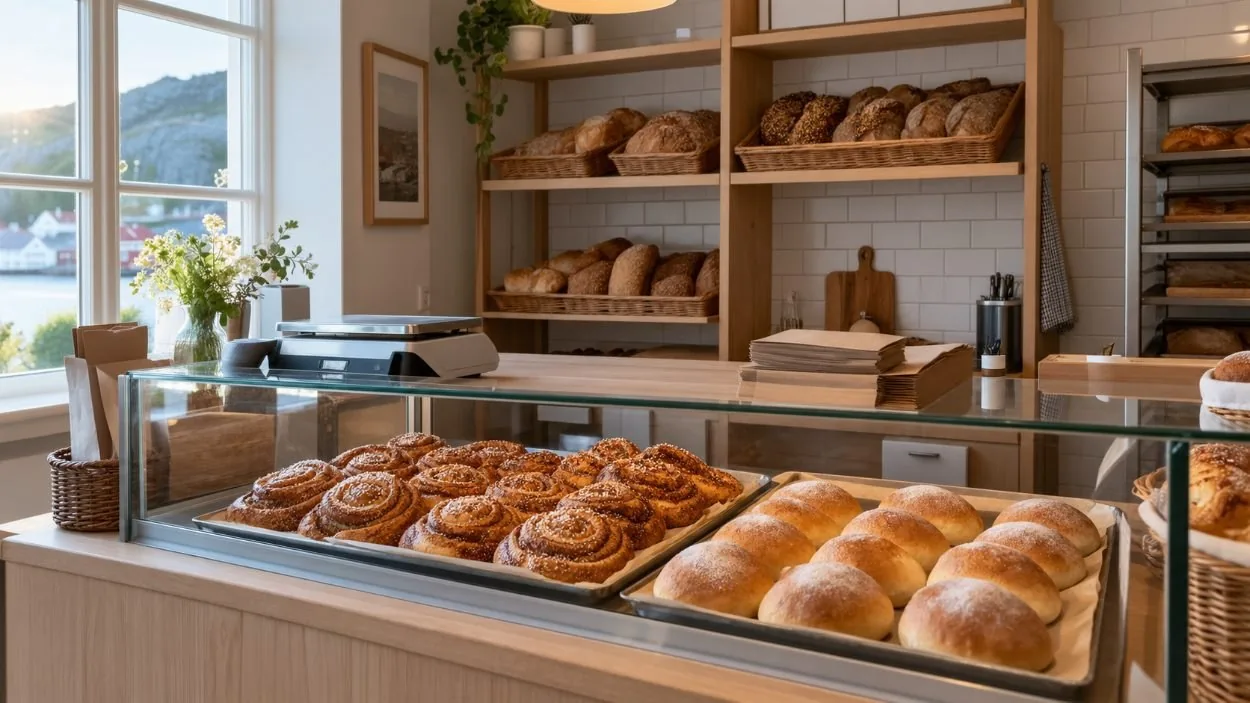
The raisins that never came back
The original skillingsbolle had raisins in it. They disappeared during the ingredient shortages of the Second World War and were never restored. What Bergen has been eating ever since is a wartime version of its own pastry, kept out of habit long after the reason expired — which is a more interesting fact about a cinnamon bun than a cinnamon bun has any right to.
An import that stayed
The Hanseatic merchants who ran the trading quarter at Bryggen from the 1230s brought their own food with them, and this one stuck. Five hundred years later nobody in Bergen thinks of it as foreign. It is a useful thing to hold in your head while people tell you what is and is not “authentic” here. The Hanseatic quarter.
Buying one
I spent four years behind a bakery counter on Nordnes where the skillingsboller came out at half past six in the morning and were gone by nine. That is the whole tactic: early. A bun that has sat under lights since breakfast is a different object. Bakeries are also the cheapest honest meal in this city, which matters more here than in most places. Eating cheaply in Bergen.
Do not confuse it with the skolebolle, which is a different bun entirely — yeasted dough, custard, icing, desiccated coconut — and national rather than Bergen’s. In western Norway it is a skolebolle; in the north and east the same thing is a skolebrød.
Not the kringle, either
Pretzel-form baking reached Scandinavia by way of Roman Catholic monks in Denmark in the 13th century, and the word comes from the Old Norse kringla, meaning ring. It is a Nordic shape with a Danish route, not a Bergen invention. The rest of the sweet shelf.
A walk that ends with cake above the city
Thirteen tastings across five cafés and restaurants in three and a half hours, including award-winning local chocolate and a brown-cheese cheesecake, finishing at Fløirestauranten on Mount Fløyen with return Fløibanen tickets included. Maximum eight people, wheelchair accessible. The listing is marked not suitable for vegans or vegetarians, and vegetarian and vegan options are available with 24 hours’ notice on an adjusted offering. Both halves of that are true and you need the second one before you book.
Frequently asked questions
What is a skillingsbolle?
Bergen’s cinnamon bun. Hanseatic merchants brought it from Germany in the 16th century and it has been the city’s favourite pastry for over five hundred years. The name means shilling bun, from the old habit of naming baked goods after what they cost.
Why are there no raisins in a skillingsbolle?
There used to be. Raisins were part of the original recipe and disappeared during the ingredient shortages of the Second World War, and they were never put back.
Is a skillingsbolle the same as a skolebolle?
No. A skolebolle is yeasted dough with a custard filling, icing and desiccated coconut, it emerged in the 1950s, and it is national rather than local — in northern and eastern Norway the same bun is called a skolebrød. The skillingsbolle is a cinnamon bun and it is Bergen’s.