Norwegian Table Manners
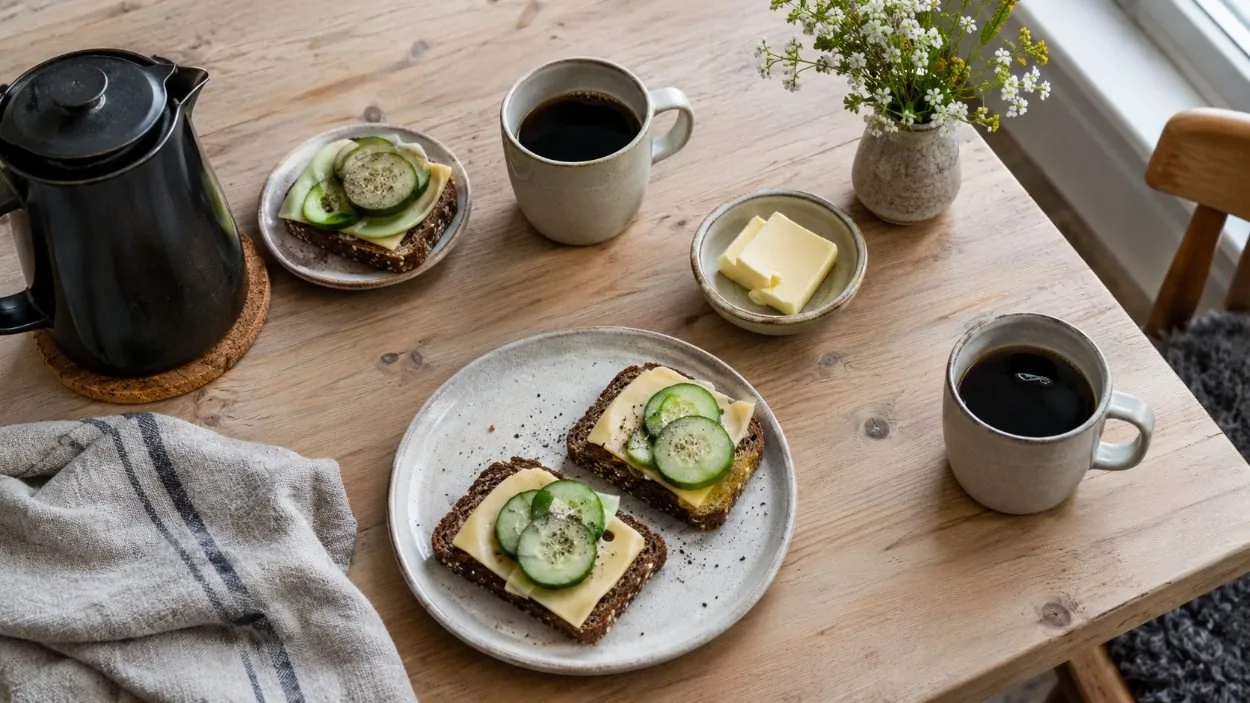
The cutlery signal
Knife and fork laid across the centre of the plate means you are done. It is the clearest non-verbal thing at a Norwegian table and it is worth knowing simply so that you are not left waiting, or cleared early.
The three that actually catch people out
First, nobody is waiting for a tip. Service is not charged separately, there is no customary percentage, and staff are on full wages — the bill is complete as printed. Tipping, in full.
Second, Bergen fish soup is meant to taste faintly sweet and sour. It is seasoned with vinegar and sugar, and that is the distinguishing feature of the city’s most famous dish. A visitor who assumes the kitchen has made a mistake is about to have a very awkward conversation. The soup, explained.
Third, brown cheese is not cheese. It is made from whey, a cheesemaking by-product, boiled down — invented in 1863 by Anne Hov, a dairymaid at a mountain farm in Gudbrandsdalen, who added cream to cow-milk whey and reduced it. She received the King’s Medal of Merit in silver in 1933, aged 87. Expecting cheddar and getting caramel is nobody’s fault but it is avoidable. Brown cheese, explained.
Rooms here are quieter than you may be used to, and a table that is loud by southern European standards will be the loudest thing in the room. Nobody will say anything. Everybody will notice.
At a private table
The home-hosted lunch puts you in somebody’s house for about a hundred and five minutes, and the conversation is as much of the point as the cooking — it is a table of four at most, with time to ask what living here is actually like. Come with questions. Also come without a dog allergy, because there is a small dog in the house.
The table where the manners are the point
Two and a half hours, Norwegian home cooking, and conversation about living here. Capped at four and not private. Pickup and drop-off at the Hurtigruten Terminal, Loddefjord Terminal or Deli de Luca Jernbanestasjon, roughly ten minutes each way. Accessibility is not stated on the listing.
Frequently asked questions
What are the eating etiquette rules in Norway?
Lay your knife and fork across the centre of the plate when you have finished. Beyond that, Norwegian tables are quiet and unfussy, tap water is normal to ask for, and no tip is expected. Tipping, without a percentage.
Is it rude not to tip in Norway?
No. Tipping is voluntary, there is no customary percentage, no service charge is added, and staff are on full wages. Rounding up after good table service is common but never expected. The full answer.
Why does Bergen fish soup taste sweet and sour?
Because it is meant to. It is seasoned with vinegar and sugar, and that is the distinguishing feature of the dish — traditionally built on stock from young saithe bones with shredded vegetables, fish balls, sour cream and cream. Bergen fish soup.