About Bergen on a Plate
My name is Marte Vikøren. I grew up in Sandviken, a twenty-minute walk north of Bryggen, and I spent nine years behind food counters in my own city. This site exists because I got tired of watching people book a six-hour bus trip believing it was a food tour.
Nine years of answering the same six questions
The first four were in a bakery on Nordnes, where the skillingsboller came out of the oven at half past six and were gone by nine. The Hanseatic merchants brought that bun here from Germany in the 1500s, so even Bergen’s signature bake is a German import that stayed five hundred years. It had raisins in it until the shortages of the Second World War took them out, and they never came back. The whole story of the bun.
The next five were on a counter in Mathallen, at the fish market end, where I explained the same six things to visitors every day. No, that is not cheese — brown cheese is made from whey, which is what is left over after cheese, and a dairymaid called Anne Hov invented it in 1863 in a valley 400 km from here. Yes, the soup is supposed to taste sour — Bergen fish soup is seasoned with vinegar and sugar, and that is the whole point of it. No, you do not need to tip me.
Brown cheese, the fish soup and the tipping question have their own pages now, which saves me another five years of saying it out loud.
What Bergen actually owns
Almost nothing people ask about Norwegian food is from Bergen. Fårikål was voted the national dish on the radio and its name came out of Danish. Brown cheese is from Gudbrandsdalen. The matpakke descends from a school breakfast scheme in Oslo in 1932. Skolebrød is national, and here we do not even call it that — in Bergen it is a skolebolle. Where the national dishes come from.
What is ours is narrower and more interesting. Persetorsk, the pressed cod that is Christmas food here and that the city council gave its own day in 2024. My grandmother made it every Christmas and would never say how long she pressed it. The fish soup that is meant to taste sweet and sour. Prinsefisk, røkerumpe, puspas — the Bergen fårikål, with carrots in it. And the skillingsbolle, which is a German import that stayed five hundred years and is now the thing the city’s own tourist board calls its national bake. Persetorsk and what Bergen is known for.
Bergen has been a UNESCO Creative City of Gastronomy since 2015, the only one in Norway, and it has almost no food tours. That gap is the subject of this site rather than an embarrassment to write around. The gastronomy title, and what it means in practice.
The bus with the waffle in it
Here is the thing that made me start writing. Search for a food tour in Bergen and one of the first things you meet is a six-hour bus day to the Hardangerfjord. Its entire food content is one freshly made waffle and a small tasting of a local drink.
It is a lovely day out. You walk behind a waterfall. It is also not a food tour, and people book it as one because it sits in the food category. A closer look at the day, recommended as a day trip, and every page that mentions it says what is actually in it.
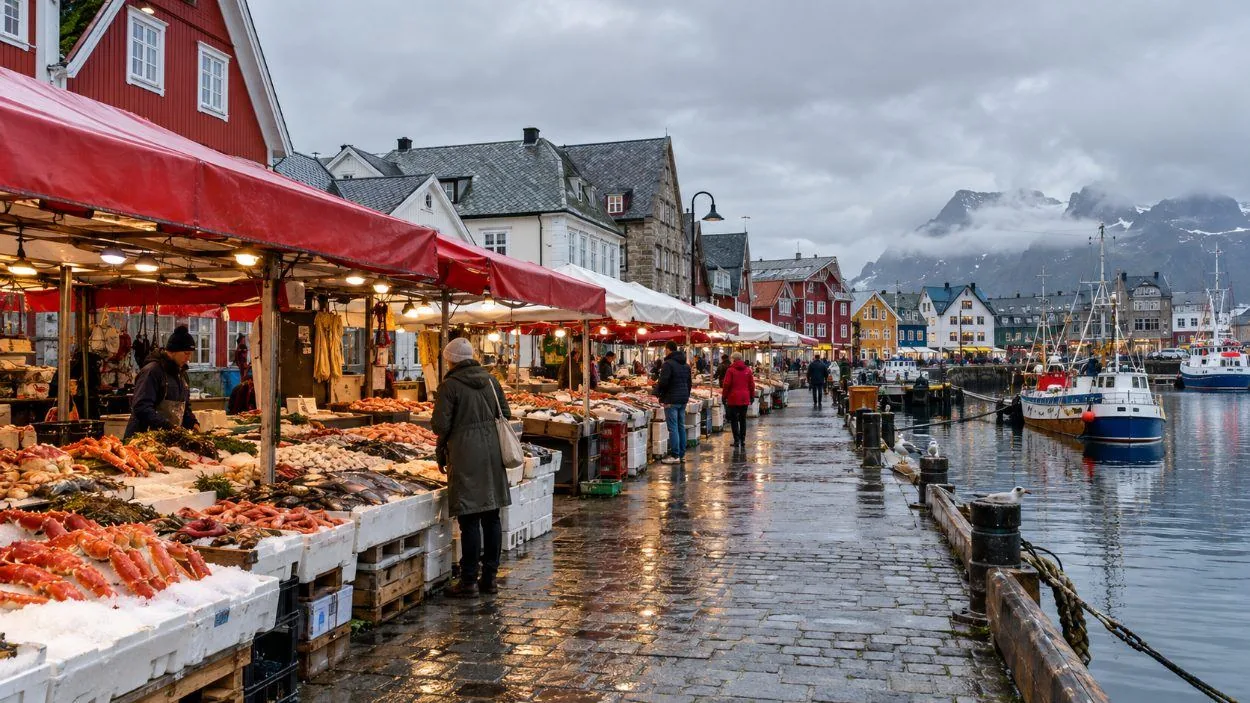
Meanwhile the city has one dedicated food walk. Around it sit a three-hour aperitivo tour for ages 20 and over, a lunch in somebody’s house, a ninety-minute cider tasting and a private two-hour walk for up to three people. There is no cooking class. There is no brewery tour. There is no tasting at the fish market, in the city whose fish market is the thing everybody photographs. The honest answer to the question.
How this site is written
- Every listing is described by what is in it. Tastings, length, group size, what is included and what is not — the things that decide whether a booking suits you. All six, up close.
- No page here prints a figure of money. Not in a table, not in an answer, not in any of the translations. What I can tell you is what is included, what is not, and what makes one listing a different proposition from the next. What a Bergen food tour includes.
- The restrictions go at the top, not in the small print. The food walk is not suitable for vegans or vegetarians without 24 hours’ notice. The aperitivo tour is ages 20 and over and needs two people to run. There is a small dog in the house where the lunch happens. The waterfalls bus does not take non-folding wheelchairs or strollers. Dietary and access have their own pages.
- I never name the operating companies. Every one of them is “the operator”. I sell nothing, hold no place on any departure and cannot get you onto one.
- The footer links nowhere but here. Booking links live in the page bodies, they go to GetYourGuide, and the disclosure page explains them.
What I would actually tell you
If you want a food tour, take the Taste of Bergen walk: thirteen tastings, eight people at most, the funicular included. If you have ninety minutes and it is raining, which it will be, the cider tasting is step-free, indoors and about a genuinely protected local product. If you want the fjord, take the bus and call it what it is.
And if you want to eat well in Bergen without booking anything at all, that is a real answer too, and it is on this site anyway. Where people who live here eat, how to eat cheaply, and what to make of the fish market, which Norwegians have been arguing about in their own national press since 2013.
Corrections are welcome and I would much rather have them than not. Get in touch.