Eating in Bergen: The Complete Guide
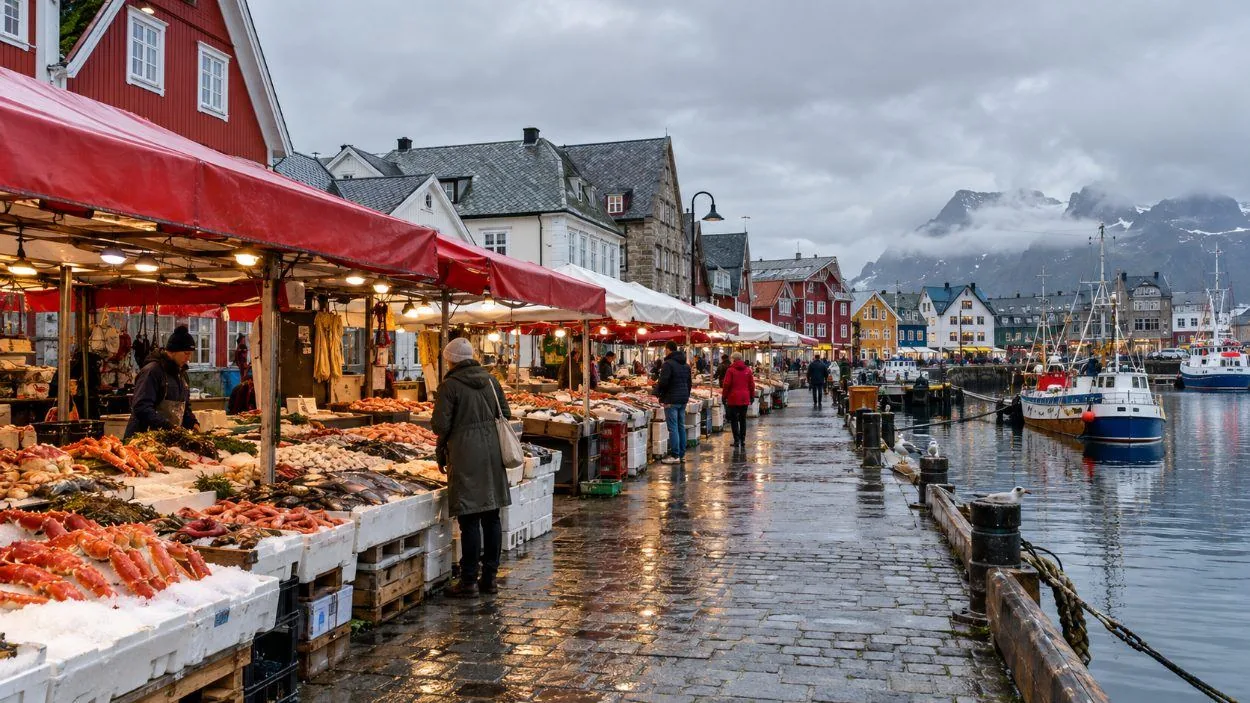
Bergen has one dedicated food walk of three and a half hours, a handful of shorter tastings, and a long shelf of fjord day trips that include a meal. The dishes the city actually owns — pressed cod, a fish soup seasoned with vinegar and sugar, a cinnamon bun the Hanseatic merchants brought here in the 1500s — are mostly not the ones visitors arrive expecting.
I grew up in Sandviken and spent nine years behind food counters here — four in a bakery on Nordnes where the skillingsboller came out at half past six and were gone by nine, then five in Mathallen at the fish-market end, answering the same six questions every day. No, that is not cheese. Yes, the soup is supposed to taste sour. No, you do not need to tip me. I write this because I got tired of watching people book a bus trip thinking it was a food tour.
One food walk, and a shelf of things that are not one
Bergen has been a UNESCO Creative City of Gastronomy since 2015, the only one in Norway, and it has exactly one dedicated food walk you can book: three and a half hours, thirteen tastings, eleven food and two drink, ending at Fløirestauranten on Mount Fløyen with the funicular ride included. Eight people maximum, wheelchair accessible, and the only food-first listing in the city. Check the dietary line first: it is not suitable for vegans or vegetarians, and vegan and vegetarian options come on 24 hours’ notice with an adjusted offering. Both are true.
Around it: a ninety-minute cider tasting, step-free and good in the rain; a lunch at somebody’s own table, two and a half hours, with a small dog in the house; a three-hour aperitivo tour, ages 20 and over, which needs two people to run; and a private two-hour heritage walk for up to three. No cooking class exists here, no brewery tour, and no tasting at the fish market, which I still find remarkable. And the longest of the six is a six-hour bus day to the Hardangerfjord whose food content is one waffle and a small tasting of a local drink. Go for Steinsdalsfossen, the waterfall you can walk behind. Do not go for lunch. The six, side by side, and what the fjord days actually feed you.
Almost nothing famous about Norwegian food is from here
Visitors find this part hardest. Brown cheese was made in 1863 by a dairymaid called Anne Hov, at a mountain farm in Gudbrandsdalen, roughly 400 km away over the mountains; she got the King’s Medal of Merit in silver for it in 1933, aged 87. It is also not cheese, because whey is what is left over once cheese is made. Better than the myth. Fårikål is the national dish because a radio programme voted it so, reconfirmed in 2014. An autumn dish with its own festival day. The matpakke descends from a school-breakfast scheme designed for Oslo children in 1932. Oslo, not Bergen. And skolebrød is not even called that here: in Bergen it is a skolebolle. The name changes as you cross the country.
What this city does own
Persetorsk first: cod cured a long time in salt and sugar, pressed, served with egg butter, boiled potatoes and vegetables. Christmas food. My grandmother made it every year and would never say how long she pressed it, and in 2024 the city council formally made 28 January Persetorsk Day, after the idea started as a joke online. Pressed cod, in full. Then bergensk fiskesuppe, and here is the detail almost nobody mentions: it is meant to taste faintly sweet-and-sour, because it is seasoned with vinegar and sugar. That is the whole distinguishing feature. If it tastes sour, it is right. After that: prinsefisk, cod under a cream sauce with shrimp, invented here for a royal visit in 1856; røkerumpe, the smoked tail of the cod; and puspas, our fårikål with carrots.
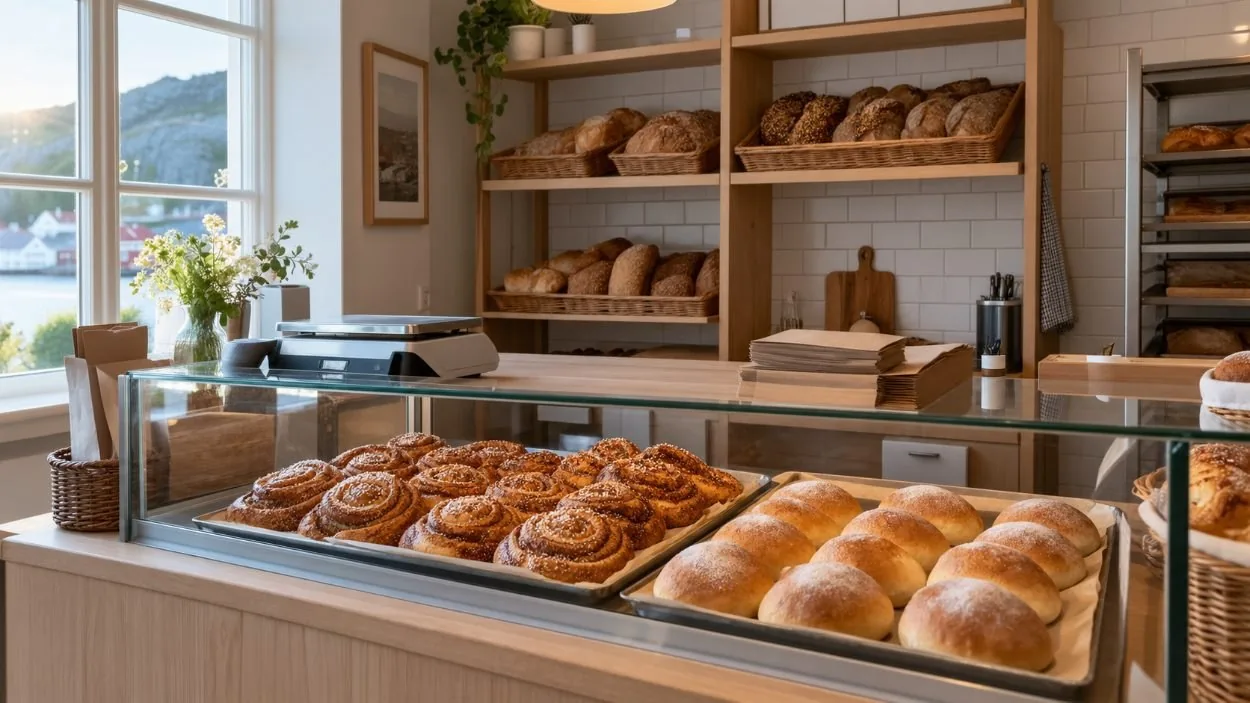
And the skillingsbolle, which I made by the tray. The Hanseatic merchants brought it from Germany in the 1500s, so the bake this city is proudest of is an import that stayed five hundred years. The name means “shilling bun”, after what one once cost, and it had raisins until the shortages of the Second World War took them out. They never came back. Buy one before nine.
The market everyone photographs, and argues about
A market has been recorded on this harbour since 1278 and moved to where it stands now in 1558. Norwegians argue about it in public: in 2013 a national paper ran the headline Norges største turistfelle, Norway’s biggest tourist trap, quoting a marketing professor and Bergen native who said locals bought their fish elsewhere. The city’s tourism director answered that nobody was complaining and visitor numbers were rising. It still runs. Both sides of it. Mathallen next door opened in 2012, is indoors and open all year; the outdoor market opens on 1 May. The hall, and what is in it.
Three things to settle, then go and eat
The tap water is excellent, so buying it bottled is a waste. Drink it. Cash is about 3% of payments in Norway, and yet since October 2024 shops on staffed premises have had to offer a cash option. Bring a card anyway. And nobody is waiting for your tip: no service charge is folded into a stated price, and for guides there is no Norwegian norm at all. The honest answer.
Which leaves what a guided walk here is for. You can reach all of it yourself, so what you are buying is translation: somebody beside you saying that the brown cheese is not cheese, that the soup is supposed to taste like that, and that the fish market on the postcard is the part of this city’s food scene Norwegians cannot agree about. Everything you can actually book.
Ready to book?
The flagship walk is the one to start with: thirteen tastings across five kitchens, capped at eight people, and it finishes on Mount Fløyen with the funicular ride included both ways. Check the dates that are open, or take a closer look first.
Frequently asked questions
Do I need a food tour to eat well in Bergen?
No — the city is small and walkable, and the places people here actually eat are easy enough to find on your own. A tour buys you the explanation: why the fish soup tastes faintly sour, why the brown cheese is not cheese, and what the people behind the counters would recommend.
Which Bergen dish should I try first?
Bergen fish soup, because nothing else tastes quite like it, followed by a skillingsbolle from a bakery rather than a café chain. If you are here in winter, persetorsk is the one that is genuinely local.
Is the Fish Market worth visiting?
It is worth seeing, and people who live here disagree about whether it is worth eating at. The indoor hall beside it keeps year-round hours; the outdoor stalls are a summer thing.