Culinary heritage walk: what it covers
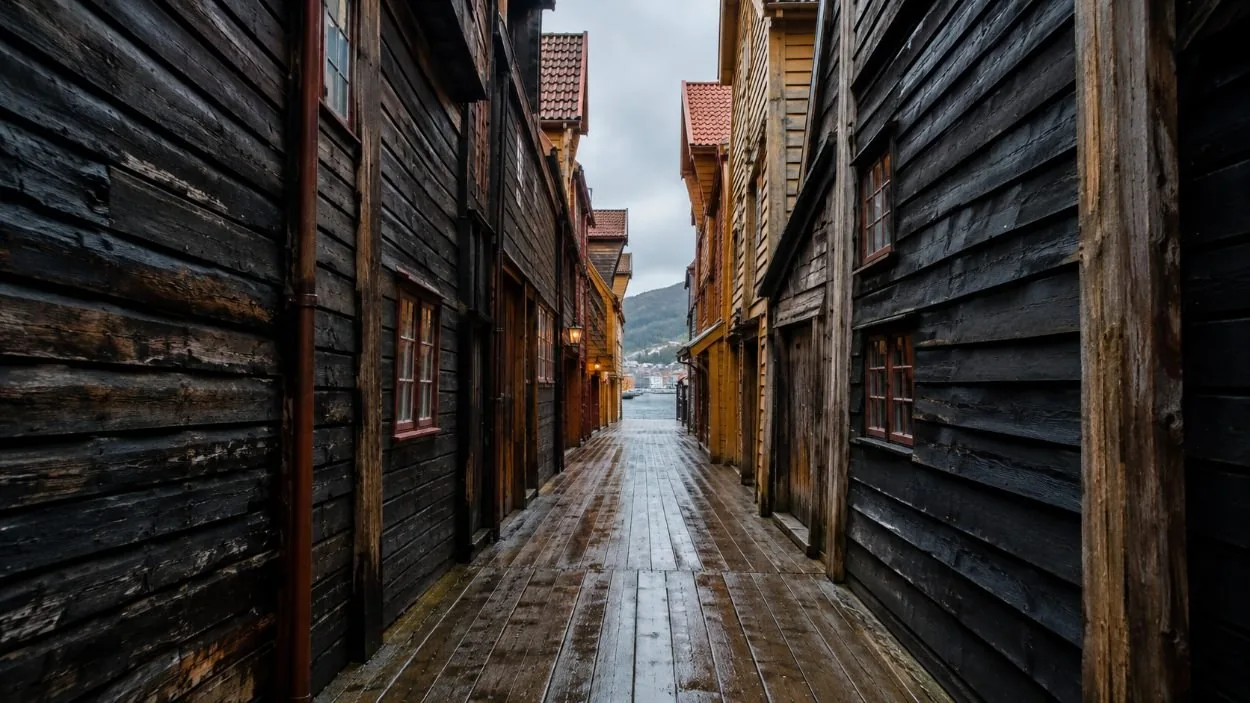
In short: this is the only genuinely private booking in Bergen, and it is a history walk with food in it rather than a food tour with history in it. Two hours, private, up to three people, meeting at the Bergen Tourist Information centre, with a local guide, transport and one food tasting. An hour at the Fish Market, an hour at Bryggen, then back to the centre. It is marked as a new activity, and the listing warns that the programme and the attractions may vary with your booking date and how busy the city is.
Two hours, and where they go
The route is short and it is specific: about an hour at the Fish Market, about an hour at Bryggen, then back to the centre. Add the walking and that is the two hours accounted for, with nothing spare. This is a tour of two places rather than a circuit of the city. How the six Bergen listings compare.
Whether that is the right shape depends on how much you want those two places explained. Both of them reward it, and both of them are routinely walked past by visitors who never find out what they are looking at.
The Fish Market, which Norwegians argue about
The market is mentioned as far back as 1278, when it stood at the end of Nikolaikirkeallmenning. Christoffer Valkendorf moved it to its present site in 1558. It was reorganised after the city fire of 1702, the Triangelen was built in 1730, Zachariasbryggen was fitted with sixty live-fish tanks in 1889, flower and fruit sections arrived in 1923, the Rundetårn kiosk in 1929, and in 1972 the market area was cut by 350 m².
The stallholders are named individuals rather than anonymous vendors — the city publishes the list, currently nine traders outdoors and two inside Mathallen — and the mix is not what visitors expect. Greek and Thai stands stand alongside the seafood.
And the argument is real, Norwegian, and on the record. In 2013 Aftenposten ran the headline “Norges største turistfelle” — Norway’s biggest tourist trap — quoting the marketing professor and Bergen native Trond Blindheim, who said the market was overpriced and inauthentic and that locals avoid it because better seafood is sold elsewhere in the city. Bergen’s tourism director at the time, Ole Warberg, defended it, pointing to rising visitor numbers and an absence of complaints. The argument still runs in the Bergen press. A guide who can walk you through that is worth an hour. The market, both sides.
I spent five years on a counter at the Mathallen end of that market, and the question I answered most was some version of “is this the real one?” The honest answer is that Mathallen opened in 2012 and is indoors and year-round, the outdoor market is seasonal and opens on 1 May, hours move about, and the people behind both are named traders with their own reputations. Mathallen, and what is in it.
Bryggen, and the reason it had separate kitchens
Bryggen went onto the UNESCO World Heritage list in 1979. German merchants traded there from the 1230s; the Hanseatic Kontor was founded around 1360, was the last of the League’s four great Kontors to open and the longest-lived, and ended in 1754 when the German Kontor became a Norwegian one. They shipped stockfish and fish oil out and brought grain, flour, malt and beer in, with a near-total monopoly on the first two. In the 1300s dried fish was over 80% of everything Norway exported.
The food fact worth an hour is this one: open fire was banned in the wooden tenements, so all the cooking was done in the Schøtstuene, the merchants’ communal assembly halls. That is why the Hanseatic quarter has separate kitchen buildings at all. The buildings standing now are essentially the rebuild after the 1702 fire, put back on the medieval plan; another fire in 1955 took part of the site, and roughly 62 buildings survive. Stockfish and the Bryggen trade.
Private, up to three, and what that changes
This is the only listing in Bergen that is genuinely private, and at up to three people it is the smallest. A private guide at the Fish Market can be asked the awkward question directly, which is the whole value of the format on a route where the interesting material is contested. The private options in Bergen.
The trade-off is what private means for the food. One food tasting is included, alongside the guide and the transport. That is one tasting across two hours, against thirteen on the Taste of Bergen walk. This is a history walk with food in it rather than a food tour with history in it, and it is better booked as the former.
The things the listing does not publish
The free cancellation window: not published. Every other listing here gives 24 hours. The programme itself is qualified — the listing is marked as a new activity and warns that the attractions and the running order may vary with your booking date and how busy the city is. In a city where cruise ships empty onto the same two hundred metres of waterfront, that is a realistic thing to say rather than an evasive one, and it does mean the two hours you get are not guaranteed to be the two hours somebody else got.
What works
- Private, and capped at three people
- Two hours is short enough to slot into a half day
- A local guide, transport and a food tasting are all included
- An hour each at the two places visitors most often walk past without explanation
- The Fish Market argument is worth having a Norwegian explain to you
- Meets at the Bergen Tourist Information centre, which is easy to find
Worth knowing
- One food tasting across two hours
- The programme may vary with the date and how busy the city is
- The free cancellation window is not published
- Marked as a new activity
- Two places, not a tour of the city
What the listing commits to
- Two private hours with a local guide, in English
- Transport
- A food tasting
- About an hour at the Fish Market
- About an hour at Bryggen
- A group of no more than three
What it does not
- A published free cancellation window
- A fixed programme; it varies with the date and the crowds
- More than one food tasting
- Anywhere beyond the Fish Market, Bryggen and the walk back
Who should book it, and who should not
Book it if you want Bryggen and the Fish Market explained by somebody who lives here, privately, in two hours. Book it if you are two or three people who would rather not join a group. Book it if history is the thing you came for and the tasting is a bonus.
Do not book it if you want to be fed, which is thirteen tastings on the Taste of Bergen walk. Do not book it if you want to cover more of the city than two places. Do not book it if you need the cancellation terms spelled out before you commit. And do not book it expecting the same two hours every time, because the listing says openly that it varies. Whether a Bergen food tour is worth it at all.
The alternatives
The Taste of Bergen walk below includes thirteen tastings across three and a half hours. The waterfalls trip starts and ends at the same Fish Market and runs for six hours.
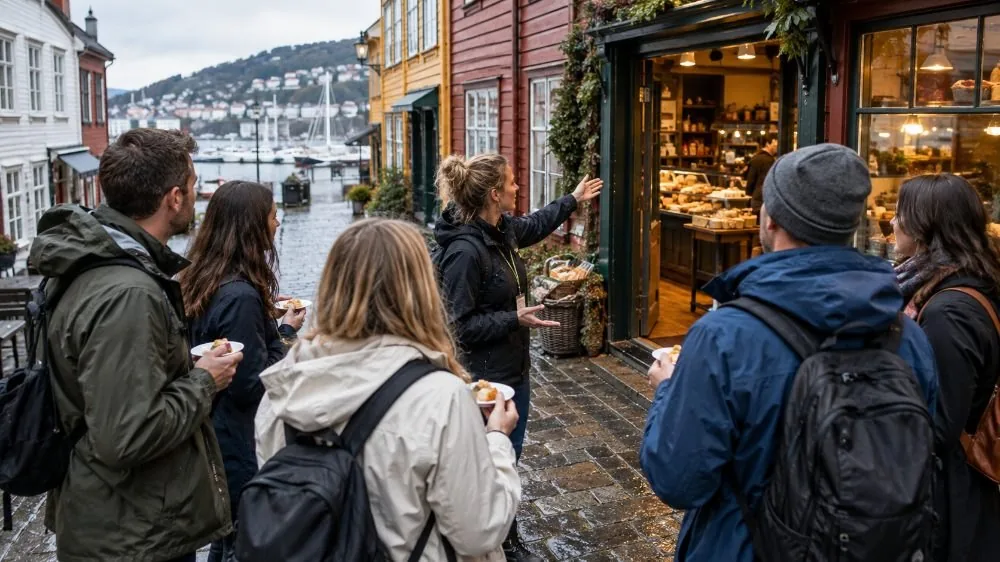 The only real food walk
Bergen: A Taste of Bergen Food Tour with Fløibanen Funicular
 Shortest · step-free
Bergen: Norwegian Cider Tasting Experience
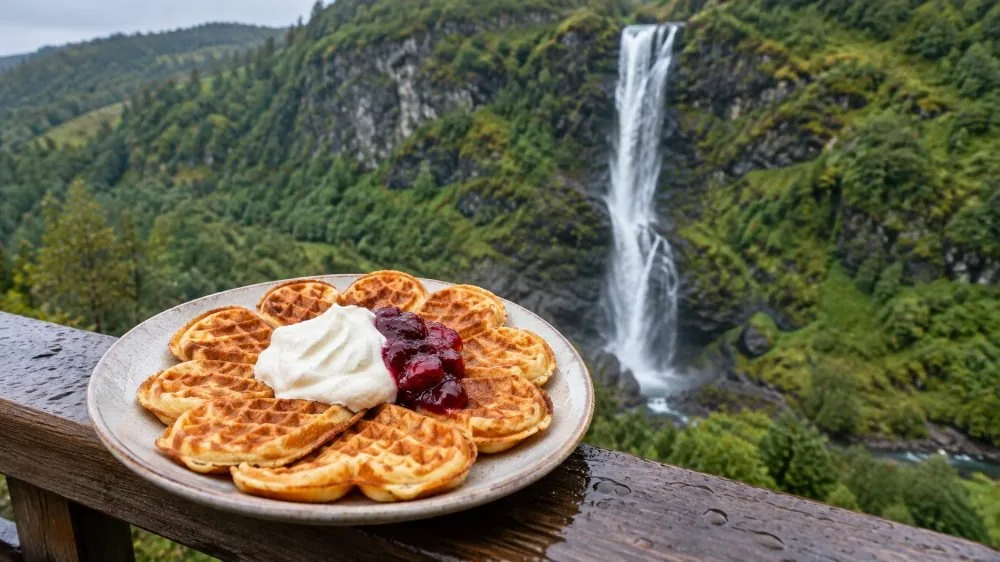 A day out, not a food tour
Bergen: Old Town and Waterfalls Guided Tour with Waffles
Frequently asked questions
Is the Bergen culinary heritage walk private?
Yes, and it is the only listing in the city that is. It takes up to three people, runs for two hours, and covers the Fish Market and Bryggen with a guide, transport and one tasting. The six Bergen listings, side by side.
What does the culinary heritage walk actually include?
A local guide, transport and one food tasting across two private hours: about an hour at the Fish Market, about an hour at Bryggen, then back to the centre. What food tours include.
Is the programme the same on every departure?
No. The listing is marked as a new activity and warns that the programme and the attractions may vary with your booking date and how busy the city is. The private options in Bergen.